|
Tejido is:
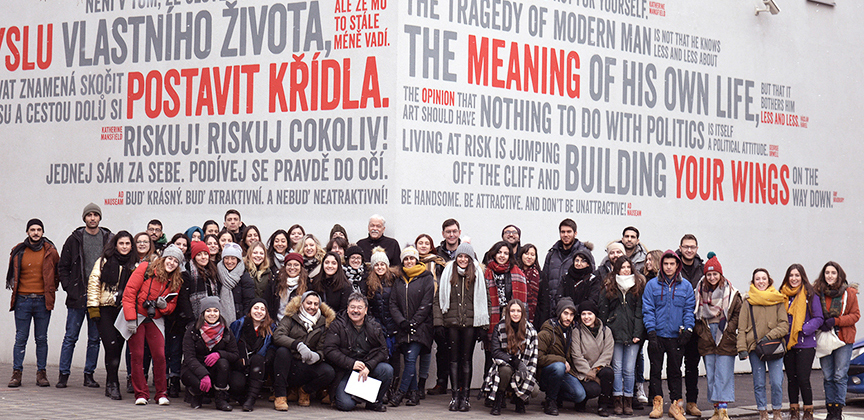
Czechia Team
Pedagogy:
Video
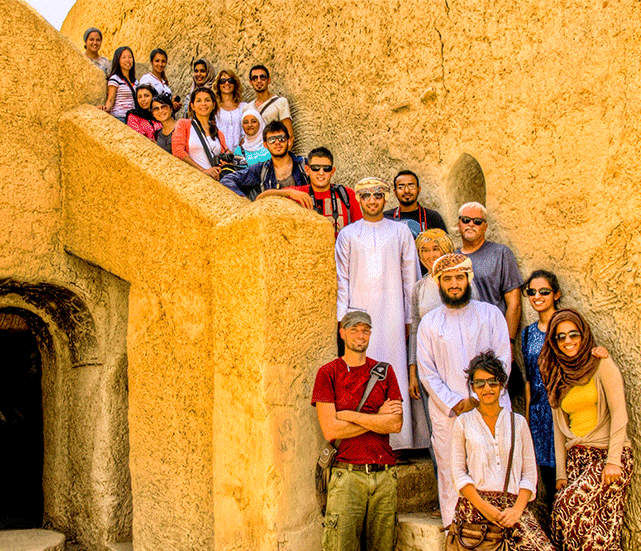
Oman Team
Praha 7 Team
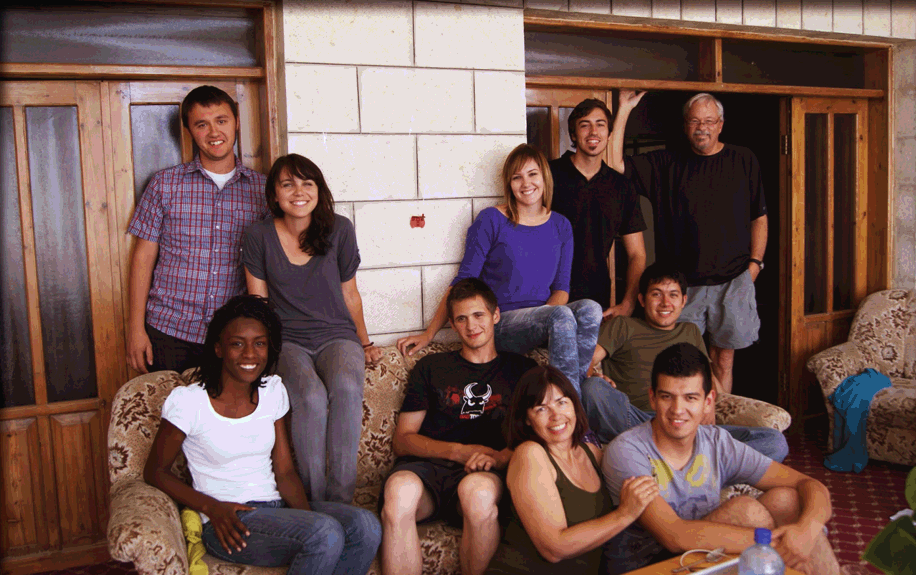
Palestine Team
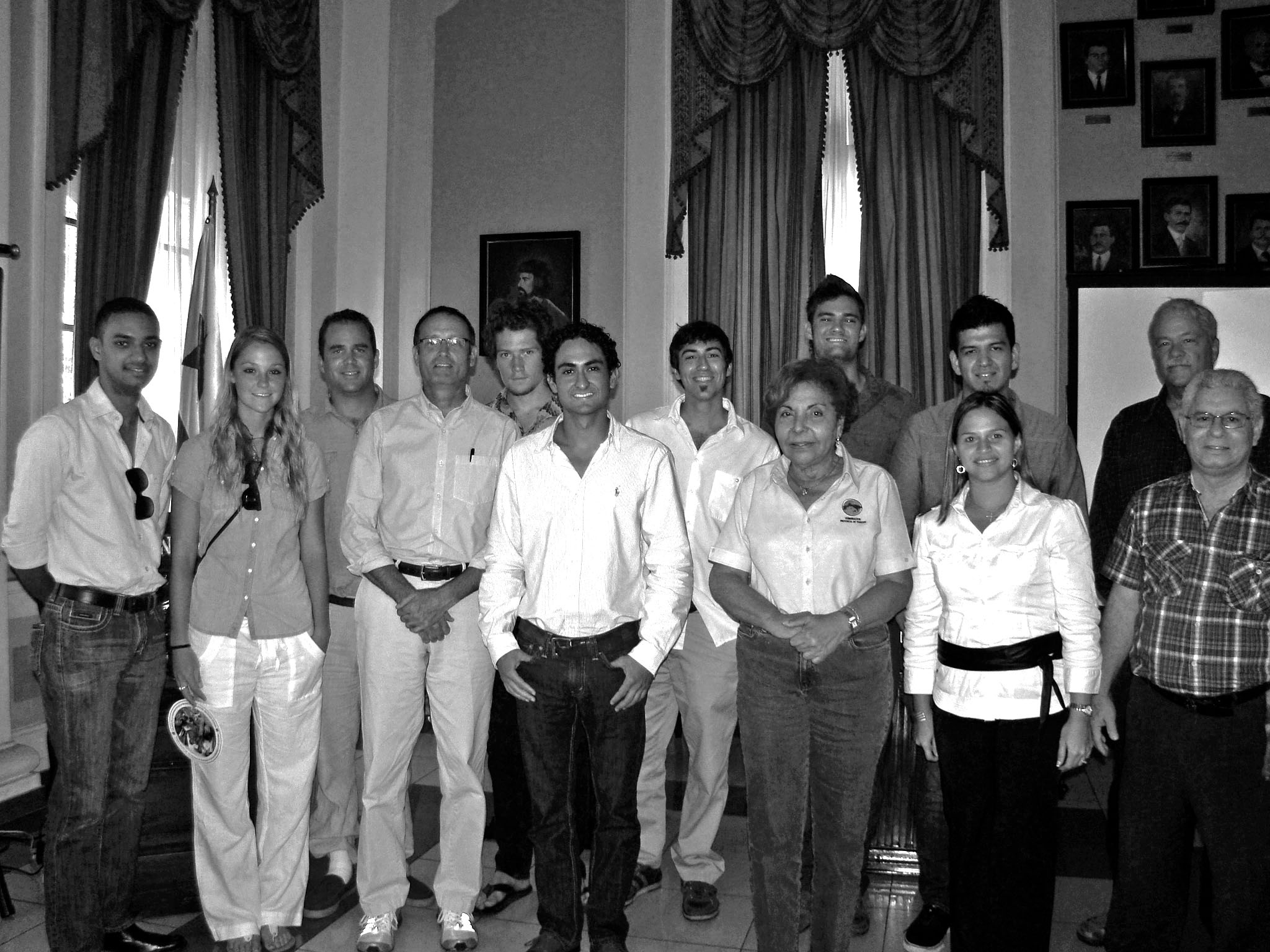
Panama 1 Team
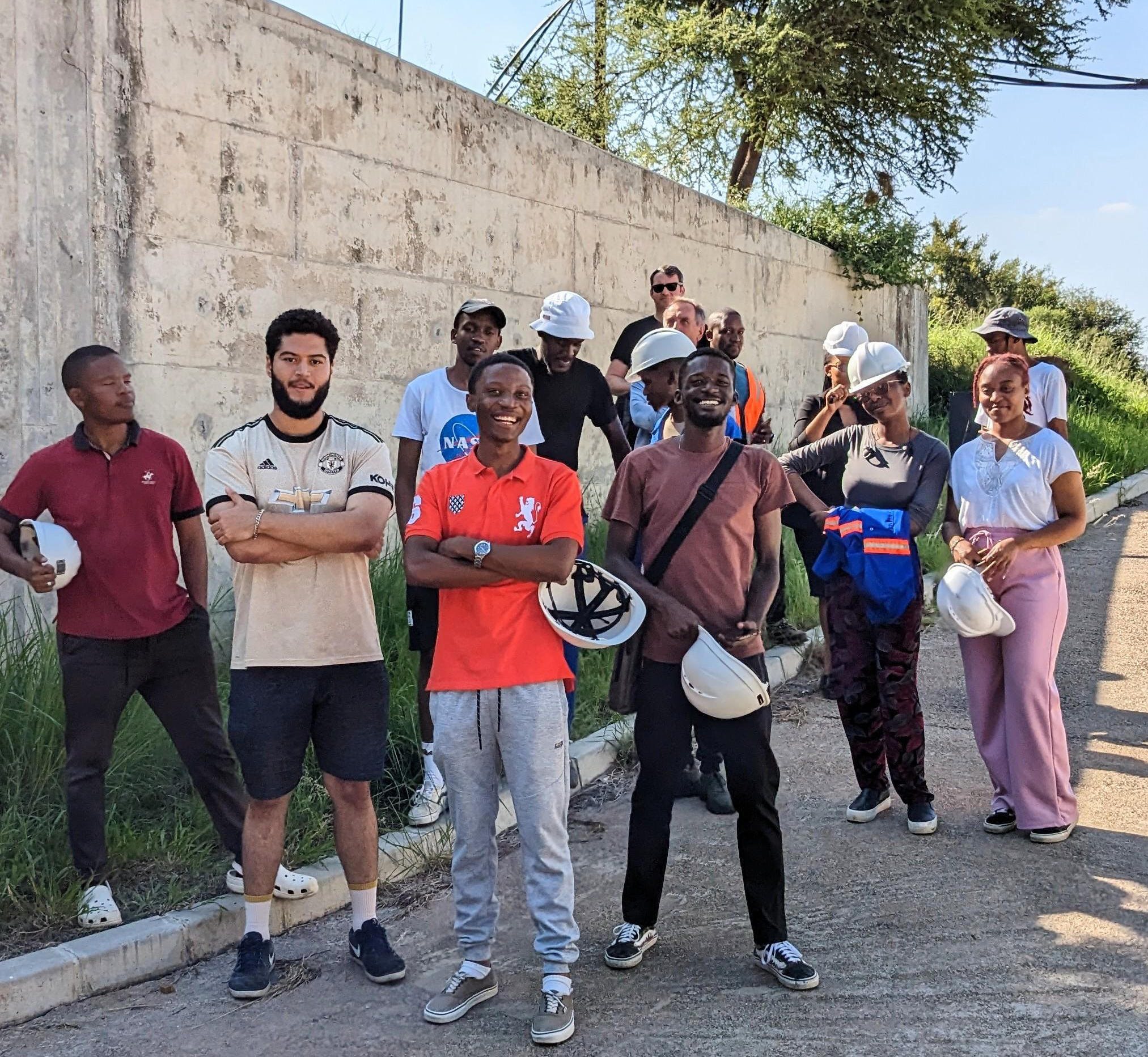
Botswana Team
Tejido is intense
Panama 2 Team
Tejido is fun
Mexico Team
Tejido is relevant
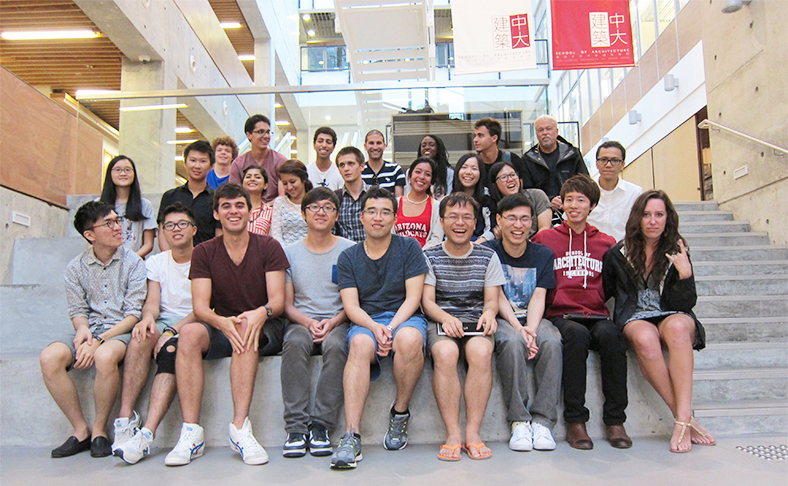
Hong Kong Team
Purpose: For the past thirty-five years the Tejido Group has developed into an interdisciplinary and collaborative applied research program in which faculty and professionals in Architecture, Landscape Architecture, and Planning work side by side with University graduate and undergraduate students in an apprenticeship-style professional / learning environment. Tejido is also an international experience and has collaborated on projects throughout the United States, the Caribbean, Latin America, Europe, the Middle East and Asia. Projects include: Post-Industrial Water Front Redevelopment in Prague and Ankara; Urban revitalization in Al Hamriya, Oman, river corridor master planning in Tucson and Ankara, harbor revitalization and waterfront development programs in Hong Kong, Panama and Mexico; the development of coastal planning and design guidelines for the State of Sonora, Mexico; tourism and resort planning for the Panamanian Canal Zone and Panamanian Government; campus master planning in Arizona and in Panama; small town revitalization master plans for several rural areas in Arizona, Sonora and Sinaloa Mexico including Show Low, Pinetop-Lakeside, Springerville, Clarkdale, Jerome, Benson, Camp Verde and Winslow, Arizona; a resort master plan for the Cuisinart Corp. in Anguilla, British West Indies; and sustainable community master planning in Picacho and Bisbee, Arizona, as well as San Carlos, Mexico Tejido selects projects in which it wishes to participate based on several criteria: 1) project uniqueness and pedagogic value in developing our students into exceptional practicing professionals; 2) client need; 3) and, the project’s potential impact on society and the environment. Although Tejido has and continues to develop projects through the construction document phase, we primarily focus on the generation of conceptual alternatives for our clients. We concentrate our efforts on developing innovative concepts through the application of research initiative. Tejido believes that designers gain insight and inspiration from a variety of sources. An essential part of our design and planning processes occurs during pre-design research. During this phase, information garnered from a variety of sources is reviewed and incorporated into the design intentions of our teams of landscape architects, planners, and architects. Critical socio-cultural, socio-economic, environmental, functional, and image-related issues are examined in depth through hybrid qualitative and quantitative methodologies. Our designers then distill relevant design and planning implications from the analysis of the data collected. These bits and pieces of design ideas (precepts), are then incorporated into comprehensive design and planning concepts in a form of post-factum hypothesis generation. As part of our pre-design research, we collect information regarding clients and site through structured interviews and questionnaires, video-tape protocol studies, and extensive case study analysis. We also undertake exhaustive site inventories, as well as user-group analysis of the site and surrounding context. We gather information, synthesize it, and analyze it for design implications. Both qualitative and quantitative research methods are often used to develop design implications from our data. Design issues are then presented to our clients for their consideration and editorial comments. These comments are then integrated into optimum solutions that are further developed and presented in both graphic, digital, and literary form. We consider these presentations as means of establishing a collaborative dialogue with our clients and their representatives. We understand the importance of client participation, and that formative feedback and thorough research designs are essential to distinctive design products. In our attempt to facilitate communication with our clients, we have developed one of the largest digital libraries of design and planning case studies in the Southwest. Unlike associations with traditional design and planning offices, Tejido offers our clients an opportunity to afford in-depth applied research and the subsequent generation of alternative concepts prior to design development and construction documents. In "real-world" situations, the conceptual design process is often foreshortened when financial resources are strictly limited. As we are essentially a non-profit organization dedicated to the education of our students and the needs of our clients, we can afford to focus our efforts on pre-design research and schematic exploration with our clients in developing complex, yet tailored master planning solutions. We see our relationship with practicing professionals as one of project creation and not of direct competition. We render conceptual design and planning services that otherwise could not be afforded. Tejido assists clients in developing their ideas to the point where they are ready to seek the services of professionals in the design development and construction document phases. The master planning documents we develop become excellent tools for our clients in the solicitation of Federal, State and private funding. The Townships of Clarkdale and Show Low are both excellent examples of this sequence of events. They used our master planning document to make presentations to Federal and State funding agencies and were subsequently awarded a number of substantial development grants. These funds were then used to hire professional firms to execute the design and planning concepts outlined in our conceptual master planning documents. Collaborants: The Fulbright Foundation, Washington D.C., U.S. Department of State; American University of Central Asia, the Department of Liberal Arts and Sciences, Urban Planning & Design, Bishkek, Kyrgyzstan; Gaza Municipality - Planning Department & the City Centre Development Plan (CCDP) for Gaza - Mayor of Gaza City - Yahya Al-Sarraj - Architect Sawsan Al-Majed; University of Botswana & Ministry of Lands and Housing, Department of Town and Regional Planning, Gaborone City Council; Architectural Institute in Prague (ARCHIP) and Prague City District 7 Planning Dept.; Bilkent University & Ankara Municipality in Turkey; Muscat Municipality in Oman and Sultan Qaboos University; RIWAQ - Centre for Architectural Conservation and Dr. Suad Al-Amiry; An-Najah National University in Nablus, Palestine; the Governor of Panamá, La Universidad de Panamá and the Ministry of Housing (MIVI) in Panamá; the Arch Diocese of Tucson, Arizona; Cuisinart S.A.; Youth Now Foundation; Ministry of Planning - Sonora, México; City of Tucson and Pima County; Cuisinart Corp.; Ministry of Urban Infrastructure and Ecology - Sonora, México; Faya Corp.; Peter Hartwig Corp.; the Townships of: Clarkdale, Show Low, Pinetop, Springerville, Greer, Jerome, Winslow, Benson, Camp Verde, Nogales, Summerhaven & Cottonwood - Arizona; Pima County Board of Supervisors – Tucson, Arizona; the Office of the Governor of Arizona; La Universidad Autónoma de Sinaloa; Mayor H.E. Sultan Al Harithy - Muscat; Pima Co. Administrator Chuck Huckelberry; Governor Mayin Correa Delgado - Panama; Sharon Adams - Main Street Director - Show Low, Arizona,; Rick Fernau - Mayor of Show Low, Arizona; Barbara Teague - Mayor of Pinetop-Lakeside, Arizona; Governor Irlena Brown Villalobos - Panama; John Jones - Head Planner of Pima Co. and the City of Tucson; Larisa Bogardus - Community Development Director of Springerville, Arizona; Kelly Udall - Town Manager of Pinetop-Lakeside, Arizona; Paul Esparza - Community Development Director of Pinetop-Lakeside, Arizona; Kay Dyson - Mayor of Springerville, Arizona; Manuel Trute - Ministry of Housing, Panama; Stephen Joseph - Planner, London U.K.; Gaza Municipality / Planning Department & the City Centre Development Plan (CCDP) for Gaza; University of Botswana & Ministry of Lands and Housing, Department of Town and Regional Planning, Gaborone City Council; Architectural Institute in Prague (ARCHIP) and Prague City District 7 Planning Dept.; Bilkent University & Ankara Municipality in Turkey; Muscat Municipality in Oman and Sultan Qaboos University; RIWAQ and An-Najah National University in Palestine; the Governor of Panamá, La Universidad de Panamá and the Ministry of Housing (MIVI) in Panamá; the Arch Diocese of Tucson, Arizona; Cuisinart S.A.; Youth Now Foundation; Ministry of Planning - Sonora, México; City of Tucson and Pima County; Cuisinart Corp.; Ministry of Urban Infrastructure and Ecology - Sonora, México; Faya Corp; Peter Hartwig Corp.; the Townships of: Clarkdale, Show Low, Pinetop, Springerville, Greer, Jerome, Winslow, Benson, Camp Verde, Nogales, Summerhaven & Cottonwood; Arizona; Pima County Board of Supervisors – Tucson, Arizona; the Office of the Governor of Arizona; La Universidad Autónoma de Sinaloa; Universidad Autónoma de Tamaulipas, UAT; Universidad de Guanajuato; Universidad Autónoma de Nuevo León - UANL; Universidad la Salle - Ciudad de México and Ciudad Obregón; Universidad Autónoma de Yucatán:
Dr. Mark Frederickson / Fulbright Professor of Architecture |